 ORIGINS (of 58 front. J.-C. with 887)
 Roman period Mérovingiens Carolingians
 FEUDALITY (from 887 to 1483)
Any power of Feudality Feudal royalty Decline of Feudality One Hundred Years old war Ruin Feudality
 MONARCHY (of 1483 to 1789)
Wars of Italy Wars against the house of Austria Wars of religion Apogee of monarchical France Decline of monarchy
 THE REVOLUTION
Ruin Ancien Régime The Republic Empire

REBIRTH, Montaigne. Montaigne, born in 1533 in Périgord, died in 1592, was mixed with the political events with its time as mayor with Bordeaux, then like deputy with the states of Blois: human and tolerant, it never engaged à fond in the fray, and often took refuge in the study. Its single work, entitled the Tests, is a succession of thoughts without order, but always deep or clever, written in a vigorous style which engraves them in the memory. The summary of its book is "Which I know ? "
NAPOLEON - COUNTRYSIDE OF RUSSIA, Taken of one fears with the battle of Moskova. The battle of Moskova is most fatal of the battles of the Empire, after that of Leipsick; the two armies were about equal forces some, and the victory was disputed a long time: certain positions were lost and taken again twice. It was a great load of cavalry which decided day; the cuirassiers of Montbrun and Caulaincourt, after having collapsed the Russian cavalry, penetrated with its following the medium of the enemy positions, and cut through the path at the French infantry. But Caulaincourt and Montbrun remained on the battle field; 45 other Generals and 30 000 men had been struck, including more than 12 000 with death; Ney and Murat, remained all the day in the medium of a terrible fire, had not been touched; the Russians had 60 000 men out of combat and their General, Bagration, was among deaths (September 7, 1812).
LOUIS XIV - WAR OF HOLLAND, Battle of Syracuse. The French navy, range with its perfection by Colbert, competed of glory with the army. Duquesne held head with the Spanish and Dutch fleets, and twice beat them on the coasts of Sicily. The second combat, which was delivered to the height of Syracuse, was keenest: one fought vessel against vessel, the two admirals were with the catches, and the death of the Dutch admiral Ruyter decided victory of Duquesne (1676).
PHILIPPE AUGUSTE - BOUVINES, Philippe Auguste orders to pave Paris. One day, tells a chronicler, that the king walked in his palate, it approached the windows to distract itself by the sight of the course of the Seine. Cars trailed by horses crossed the city then, and by stirring up mud, they made some leave an unbearable odor. The king could not hold to with it and withdrew himself, but the odor continued it until in its palate; then it conceived a project that none of its predecessors had dared to undertake, because of the expenditure: it convened the middle-class men and the provost of the city, and ordered to them to make pave with strong stones all the streets of the city.
HENRI III - HENRI OF BOURBON, Assassination of the duke of Own way. Thursday December 22, 1588, the duke of Own way, by sitting down at table to dine, found under its towel a ticket in which one informed it that the king wanted to make it assassinate: "it would not dare" says it contemptuously, and the next morning it went to the council, like habit; but at the time when it raised the velvet door which closed the cabinet of the king, two men threw themselves on him with the improvist, a third seizes the legs to him; others ran in mass: "Mercy" exclaimed the duke, but it was bored de.toutes.parts before to have been able to fire its sword, and it fell while râlant to the foot from the bed from the king. Henri III left at once the close room, approached the wide body and a kick to the face gave him, while saying: "Now I am a king de France". Henri de Guise, who still breathed, pushed a choked cry and returned the heart.
LOUIS XIII - CONCINI, Died of Concini. A young courtier, Albert de Luynes, coveted the place of Prime Minister; he flattered Louis XIII skilfully, excited it to demolish himself of Concini, to move away his mother and to take in hand the government. Louis ordered to stop the marshal of Anchor, and to kill it if it resisted. The captain of the Vitry guards, in charge of the arrest, understood that him for an assassination was asked, and satisfied the desire of the king: at the time when Concini entered to the Louvre, Vitry and its people threw themselves on him and killed it with blow of gun (April 1617).
HENRI IV - SIT OF PARIS, Henri IV In Aumale. Henri IV pushed with strength the head office of Rouen, when the duke of Parma came for the second time to tear off hands to him the victory. Henri, leaving large army under the walls of Rouen, ran with a part of his cavalry ahead of of the Spaniards to observe their movements. He met them in Aumale, and started the combat, although he had only 1000 men against 30 000: received by a hail of balls, wrapped by the enemy cavalry, it showed the first soldier of the world, but had its safety only with the extreme prudence of the duke of Parma, which, fearing a trap, did not dare to make give all its troops.
PHILIPPE VI, The ford of Blanquetaque. Two days before Crécy, the English army had failed to be entirely destroyed: driven back with the sea and the Sum, it did not seem to be able to escape to Philippe VI who approached with a large army, but the English were made show by the peasants el ford of Blanquetaque, practicable with low tide; they passed it at the point of the day, and collapsed the small French body which kept right bank of the river: one fought in water with fury, but when Philippe VI arrived on Al Summons, it was too late: the English were established other side, and the rising tide made the river insuperable.
NAPOLEON - ULM, Battle of Trafalgar. The battle of Trafalgar made England main absolute of the seas. The French fleet and the Spanish fleet joined together counted 33 vessels, 5 frigates and 2 brigs; the English admiral Nelson had only 27 vessels, but the majority were stronger than ours, and it could make them give all at the same time, with the place that the French admiral Villeneuve, opposed by the wind, could not put some in line which 23. The victory of the English complete, but was dearly bought: it lost 3 000 men and their admiral; our sailors defended themselves with rage, and 7 000 of them perished mitraillés, drowned, struck down: the crew of Achilles let itself jump rather than to go (October 20, 1805).
LOUIS XIII - RICHELIEU, The Botanical garden. The Botanical garden, intended for the instruction of the medical students, was founded under the direction of Richelieu by one of the doctors of Louis XIII, Guy of the Brush, which liberally gave the ground necessary (1626); one joins together a great number of rare plants there and one instituted public courses there (1640).
LOUIS XIV - SUCCESSION Of SPAIN, Departure of the grandson of Louis XIV for Madrid. New king d' Espagne, Philippe V, after having said good-bye to Louis XIV and in France, left Versailles on December 4, and made his entry in Madrid, February 18, 1701. The eighteenth century opened with glory, and the courtiers repeated with enthusiasm the word of Louis XIV: "There are no more the Pyrenees"
HENRI IV - SULLY, Assassination of Henri IV. Henri IV had left the Louvre in one fits with body discovered to go to the Arsenal, where he wanted to see sick Sully, when, to the entry of the street of the Ironwork, in a tightened place, at one time when the horses went to the step, a fanatic poor wretch, Ravaillac, were thrown on the king and twice inserted its dagger in the chest to him. Henri subsided without pushing a cry, and its body was brought back to the Louvre: the best of the kings had died and its great projects with him; France was going to fall down in the disorder (May 14, 1610).
LOUIS XIV - TREATY Of UTRECHT, Victoire de Denain. Denain was a bright return of fortune. Prince Eugene had more men than Villars, but its forces were disseminated of Sambre in the Scheldt. Villars, after having misled the enemy by skilful operations, went quickly with all its forces against the fortified camp from Denain, carried it attack under an appalling fire, destroyed there 8000 men and y took sixty flags. The remainder of the enemies arrived at the noise of the gun, but they found the camp with the capacity of the French and were constrained to be withdrawn; the victory had not cost Villars more than 500 men (July 24, 1712).
CONSTITUENT ASSEMBLY - MIRABEAU, The Royal family taken along to Paris. The constituent Assembly, after having abolished the privileges, had, in the declaration of the rights of man, proclaimed the principles of personal freedom and national sovereignty, but the king refused to sanction such radical reforms; the people of Paris, fearing new attempts at coup d'etat went in mass to Versailles, invade the palate, massacred some bodyguards, and took along of force the royal family to Tileries, to hold it at his disposal (October 5, and 6 1789).
LOUIS XV - REGENCY, Louis XV in the Palais Royal. A few days after funerals of Louis XIV, September 12, 1715, the young person Louis XV was brought of Vincennes in Paris by his Villeroi tutor, and held in the Palais Royal a bed of justice, i.e. a solemn assembly, where the duke of Orleans was proclaimed regent, contrary to the wills of Louis XIV.
FRANÇOIS 1st - CÉRISOLES, Charles-Quint at the Court of France. After the truce of Nice, François 1st testified to his former rival an excessive friendship: he revealed a treason of the Gantese to him and invited it to cross France to go to punish them. Charles-Quint, happy to avoid a long sea journey, accepted with eagerness the offer of the king, came to Bayonne, and accepted a splendid hospitality in the cities which it crossed, and in the castles of Amboise, of Blois, of Chambord, Fontainebleau and the Louvre. Martin of Bellay tells in his memories that one day one of youngest son of the king, the duke of Orleans, jumped in croup behind the emperor while exclaiming: "Lord, you are my prisoner" Charles-Quint tasted the joke little, and taken distrust, it hastened to leave (January 1540).
LOUIS XIV - COLBERT AND LOUVOIS, Colbert. Colbert is one of the large ministers who organized old France: endowed with an extraordinary activity, it joins together between its hands attributions of our marine and fine art, public works, trade, agriculture, interior, Ministers for Finance. It is told that it worked sixteen hours per day. Impassioned admiror of Richelieu, it faced like prejudged them to him and hatreds to destroy the abuses and to think only of the public property: he wanted that France had all glories. Its death was a great loss for Louis XIV of which it was like the good genius (1683).
THE DIRECTORY - TREATY OF CAMPO-FORMIO, Marceau Born in Chartres in 1769, sergeant in 1789, major general in 1793; one of the winners of Fleurus; killed in Altenkirchen (Germany), the age of twenty-seven years (1796).
LOUIS SAINT - WHITE OF CASTILLE, Saint Louis refuses to only escape from the shipwreck. The Joinville historian pays of Louis saint of quite beautiful actions. One day its galère touches against a sand bank on the coast of the island of Cyprus, and it was shaken so much by the shock which it appeared unable to hold the sea a long time. One advised with Louis saint to pass on small a galère which followed the large one: "Not, it answered, since this boat cannot receive us all, I do not want to only run away myself: many of those which I would have given up would not dare to continue their voyage without me, and would be likely to remain in Cyprus all their life. I like to better put my confidence as a God "the vessel resisted by miracle, and all the companions of Louis saint re-examined France (1254).
CHARLES VII - END OF THE AVERAGE AGE, Wishes of Pheasant. With the news of the catch of Constantinople, the pope wanted to organize a crusade; but religious enthusiasm had cooled; the One Hundred Years old war hardly finished, and France was exhausted. Only one prince spoke to walk against the Inaccurate ones: it was the duke of Burgundies Philippe the Good, spirit chivalrous and quarrelsome; it joins together the nobility in Lille in a colossal feast, where it tried to overheat the hearts by allegories; a girl representing the Church advanced vêtue mourning, and beseeched the assistance of the Burgundian knighthood; the duke swore on a pheasant that he would go to the East to fight the Grand Turk, and all the guests repeated the same oath, but none them held word (1454).
LOUIS XV - VOLTAIRE, Voltaire. Born in Paris in 1694, Voltaire takes of hatred early the absolute royalty and religious intolerance; accomodated well by the largest lords and the princes, it does not think of upsetting the company, and it does not love really the people, but it tackles the abuses boldly, denounces the injustices, makes rehabilitate the innocent ones, such as Calas wrongfully condemned to the torture of the wheel; it is put entire at the service of what it believes the truth, and dies in Paris in 1778 after having exerted an immense influence. Voltaire is at the same time one of our great writers, at the same time poet, philosopher and historian.
THE GAULE CONQUERED BY THE ROMANS, Sit of Alésia Alésia (Sainte-Reine Alise, in the Gold Coast), was one of the strongest places of Gaule, and Vercingétorix defended it with 80 000 men. But César blocked it and starved it: the armies which tried to deliver it were overcome; all the exits of besieged failed, and Alésia was reduced to capitulate.
INVASION OF THE BARBARIANS, Frank king on the bulwark The Franks were vêtus of a sayon and braies; they carried large moustache and long hair which floated on their back like a mane; they scorned the armour; their armament was composed of a bad shield, of one framée, small iron lance, of francisque, axe with two edges, of a harpoon and a sword called scramasax. When they had elected their king, they raised it on the bulwark, i.e. on a shield, and they carried it on their shoulders to the acclamations of the army.
PHILIPPE THE BEAUTIFUL ONE - INSTITUTIONS, Enguerrand de Marigny led to the torment. At once after the death of Philippe the Beautiful one, the noble ones were avenged for him on its minister Enguerrand de Marigny: they showed it treason, of peculation, false coining and of magic: the unhappy one, given up by Louis X, had as judges its more enemy mortals, and did not obtain even the word to defend oneself; it was condemned to be hung, and its body remained during two years attached to the gibet of Montfaucon, beside those of the criminals. His wife and several of her friends were thrown in the dungeons (1315).
LOUIS XIV - FIRST WARS, Died of the duke of Beaufort. Louis XIV had been made the chief armed with Catholicism: its fleets drew revenge on the pirates from Tunis and Algiers, but the forwarding of Crystallized was unhappy. The 6000 men who were sent there to help the Venetian ones against the Turks were crushed under the number in a furious exit, and the duke of Beaufort, descended bravely from his vessel to take his share of the combat, was killed in the fray (June 1669). The remains of the French troops were re-embarked, and the island of Crystallized fell to the capacity from the Turks.
FRANÇOIS 1st - MARIGNAN, Marguerite de Valois. Marguerite de Valois or of Angouleme, born in 1492, was the girl of Charles of Angouleme, and sister of François 1st. After having been required in marriage by Charles of Austria and the constable of Bourbon, it married the duke of Alençon. Widow without children in 1525, it went to Madrid to comfort her captive brother, who liked it tenderly and who called it the Marguerite of the Daisies. She remaria in 1527 with king de Navarre, gave asylum to the calvinists, attracted at her court Calvin and Clément Marot the poet, and composed itself of poetries and the tales. She had as a girl Jeanne d' Albret, the mother of Henri IV.
LOUIS XIII - RICHELIEU, The marshal of Créquy. Marshal of France in 1622, Créquy took a glorious share with the war against the duke of Savoy: it was him which led the attack of the No Suse. During the Thirty year old war it was useful in Italy against the Spaniards, and was killed out of a blow of gun in 1658.
HENRI II - METZ, The blow of Jarnac. Jarnac and Chataignerie, which had to empty an affair of honour, obtained new king Henri II the permission to fight: the duel take place with Saint-Germain in front of a many assistance. The king and the courtiers, who had insulted Jarnac, made wishes for Chataignerie, and, trustful in its force with the fencing, they did not doubt its victory; they had even made prepare a great feast. But the exit of the combat misled their forecasts; Jarnac, by a skilful response, sliced the bulge of its adversary, and made him grace of the life. Henri II, constrained to conform to the uses, kissed the winner; but it enrageait of spite, and made violently disperse the crowd, which pushed cries of joy for narguer the court (1547).
CONVENTION - TERROR, Battle of Jemmapes. The victory of Valmy had forced the Prussians to move back; the victory of Jemmapes stopped the Austrians and gave Belgium to France; the French Army, mainly made up of volunteers, was badly vêtue and badly equipped, but it was supported by enthusiasm and danced the carmagnole until under the fire of the gun; it sprang by singing with the attack of the Austrian positions, and anything been able to stop it (November 6, 1792). The Dumouriez following day made its entry in Mons, and the 14 in Brussels. Belgium, delivered Austrians, was full with joy of becoming French, and Europe was plunged in the astonishment.
CHARLES VII - CASTILLON, Charles VII fact thanks to the Dolphin. Impatient to reign, the Louis dolphin had been put at the head of noble that the reforms of Charles VII dissatisfied; but the middle-class men and a part of noble decided vigorously against this revolt which benefitted the English. The Dolphin, abandoned as of his, came to kneel in front of his father and to beseech his grace: "Be welcome, tells him the king, if you are determined not to fall down in similar faults; if not, the doors are open for you; we will ask others to help us to maintain our honor "
FRANÇOIS 1st - CHARLES-QUINT, Henri VIII. King d' Angleterre of 1509 to 1547, Henri VIII turned himself several times against France. Irritated against the Holy See, which refused to cancel its marriage with Catherine d' Aragon, it was made declare by its Parliament supreme chief of the Church of England (1531), and married successively Anne de Boleyn, Jeanne Seymour, Anne de Clèves, Catherine Howard and Catherine Parr; two of them perished on the scaffold.
LOUIS XIV - SUCCESSION Of SPAIN, Fights in Crémone. After Louvois the abuses had reappeared in the army: the ranks were given to the favour, and the incapacity of the Generals brought disasters. With Casement bolt, Villeroi, which could not be kept, was made prisoner the night, with his headquarters, by imperial riders, and the French, dispersed in the barracks, ran the greatest danger; they could fortunately join and drive out the enemy of the city, so that they had the double advantage of preserving Crémone and of having lost Villeroi. (February 1702.)
FRANÇOIS II, Amboise. The chief of the conspiracy of Amboise was an adventurer named Renaudie. It got along with the prince of Condé, brings together in Nantes, in the greatest secrecy, the delegates of the Protestant cities, and was advisable with them to remove the king with the castle of Blois, then to stop the Own ways, to have the government. But François de Guise, informed plot by spies and two treacherous Protestants with their party, took along the king to the castle of Amboise, easier to defend, made come from the troops to small noise and was held on his guards without appearing anything to know. Entreated were taken as with the trap: detachments of cavalry embusqués in wood seized them before they had been able to be assembled and led them to the castle of Amboise, where the majority were decapitated, hung or drowned. Renaudie, surprised in the wood of Castle-Renaud, was killed out of a blow of arquebus, after having sold its life dearly, and its body was attached to an bracket on the bridge of the Loire (March 1560). The prince of Condé, who had awaited the events before taking the weapons, declared impudently that it was not plot, and as there was no against him unquestionable proof, François de Guise was constrained to let it leave.
LAST CAROLINGIANS, Hugues and Raoul. Hugues the Large one could have been made elect king by the large ones after the deposition of Charles the Simple one; but it preferred to strengthen its power in its duchy, and it made give the crown to his brother-in-law Raoul, duke of Burgundy. Raoul was crowned in Saint Médard's Day de Soissons by the archbishop of Direction (923). When in unhappy Charles the Simple one it was imprisoned in Péronne and there died into 929.
THE FIRST CRUSADE, Preaching of the crusade. When Pierre the Hermit had told with sobs the sufferings of the Holy Land Christians, the pope Urbain II rose on his throne and harangua innumerable crowd: "Men of France, says it, time had extinguished between you any hatred, and had just linked your forces against the enemies of God. If you feel retained by the love of your children, your parents and your wives, think of the eternal life and with the imperishable glory which awaits you "A these words an immense cry burst" God wants it ", then all the multitude prosterna against ground so that the pope gave him the discharge.
HENRI IV - ARCH, Battle of Arch. Henri IV, who had only 7 000 men against 30 000, seemed in a desperate plight, but it was cut off from the heights from Arch, like in the suburbs and the castle of Dieppe; Mayenne made during three weeks of main efforts to force it in its positions: all its attacks were useless, and, when it learned the approach from an army of help, it was withdrawn in all haste. The honest companion of Henri IV, Crillon, which suffered from a wound, had not been able to attend the battle: Henri wrote to him with his ordinary gaity: "Hang yourself, honest Crillon, we overcame without you"
The FÉODALITE, Degradation of a knight. The knight who missed with the honor was degraded solemnly! he was brought in front of crowd, stripped of his armour coin by coin, placed almost naked on a stretcher, cover of a pall and delivered to the torturers. Twelve priests attended this long torment by singing the prayers for the dead.
CHARLES IX - WARS OF RELIGION, Catherine de Médicis & Charles IX. Charles IX, after having resisted the excitations of his mother a long time, had finished by him yielding: "By God death, he with rage says, since you find good that the admiral is killed, I want, me, that one kills also all the huguenots of France, so that there does not remain about it one which can reproach it to me" Catherine did not neglect anything so that this desire was fully satisfied.
HENRI III - HENRI OF BOURBON, Died of Catherine de Médicis. When Henri III saw his died enemy, it went down in his mother, reserve with the bed by the drop: it had not prevented it its intentions against the duke of Own way, and Catherine, whose apartment was located below that of the king, wondered while trembling what had just occurred. The disaster news struck it stupor; forced to recognize itself in her son, it felt too criminal to reproach him a crime; overpowered by the old age and the disease, tormented of anguish and remorse, forsaken and which cursed, she died in prey with despair, twelve days only after the duke of Own way (January 5, 1589).
LOUIS XII - BAYARD, Bayard With Brescia. Bayard was as good as brave man. After the catch of Brescia by the French (1512), only one house escaped from plundering: it was that where was placed wounded Bayard; while the other inhabitants, men and women, underwent all the insults, protected from Bayard were respected, and did not have to pay any ransom.
PRIMITIVE POPULATIONS OF THE GAULE, Human sacrifices. This engraving represents the legend and not the historical truth, which escapes to us: at the bottom of a forest of oaks, of old druids out of white dress achieve the sacrifice in front of the assembled warriors: one sees all with the entour large stones called dolmens and menhirs, which are venerated like furnace bridges. This legend does not rest on any base; we know anything neither the age nor of the costume of the druids, and it is certain that the dolmens and the menhirs are much older than Druidisme.
LOUIS XIV - MAZARIN, Arrest of Broussel. The first riot of the Sling was caused by the imprisonment of Broussel, adviser at the Parliament, which had pointed out itself by its opposition to Mazarin: August 26, while one sang Te Deum with Notre-Dame, for the victory of Lens, Broussel was stopped in its family by guards: the people, which called it his guard, raised themselves at once: one did not manage to tear off it with the soldiers, but Paris roughcast barricades, and four hundred and thousand votes shouted: "Freedom or Broussel".
LOUIS XVI, Marie-Antoinette. Marie-Antoinette, who had married Louis XVI in 1770, was girl of the emperor of Germany François 1st and Marie-Thérèse of Austria. She was of a rare beauty and an exquisite grace, but its cheerfulness displeased with the dissatisfied ones, and its luxury irritated the famished people; its least faults passed for crimes.
LOUIS XIII - CONCINI, Plundering of the house of Concini. This murder was followed hideous scenes: the people, which hated Concini, celebrated his death by bonfires and songs; the rabble rua on its hotel and plundered it, without one doing nothing for preventing some; then the exaggerated ones went to unearth the corpse with Saint-Germain-l' resident of Auxerre, trailed it street in street and ended up burning it. De Luynes adapted the goods of its victim, and not to have not to fear the marshal's wife of Ancre, it made it show sorcery, condemn to death, decapitate and burn in place of Strike.
JEAN - ÉTIENNE MARCEL, States General. The States General were composed of deputies of the nobility, the clergy and the third state; but the noble ones, cut down by their defeats, had lost very ascending on the Parisian ones; they were withdrawn and any more but did not think of fighting; the clergy, directed by Robert Lecoq, bishop of Laon, supported the third state in its complaints; the influence passed thus to people of the trades, and mainly to the clothier Étienne Marcel.
THE DIRECTORY - NEWS WARS, Assassination of the French deputies with Rastadt. The French deputies sent to Rastadt to carry words of peace to the Germans left the city in the car with their families, when Austrian hussards melted on them and sabred them (April 1799). Thus the enemies of France, in their hatred of the Revolution, did not move back even in front of the infamy.
THE DIRECTORY - ZÜRICH, Victoire de Zürich. The victory of Zürich, gained by Masséna, would deserve to be more popular, because it saved France. The Russian army of Souvarow, surprised in the mountains, crossed in several sections, pushed in the glaciers and the chasms, lost there 30 000 men, his artillery and its luggage (September 1799). Russia renonça to continue the fight, and France could turn all its forces against Austria.
LOUIS XI - PÉRONNE, Foundation about the Michaelmas. The order of Star, instituted by Jean the Good, had fallen little by little in disuse. Louis XI was not a chivalrous king, but it understood that an order of knighthood of which he would be the chief would be for him a great force, and he founded the order of the Michaelmas who was to only have thirty-six knights, including twelve named by the king, and the other elected officials by the twelve first; the distinctive sign of the order was a gold collar, furnished with shells of money and a medal which represented the archangel embanking the dragon; the knights swore to defend the king until death. The order was founded in 1469, in the Mount-Saint-Michel.
CONSTITUENT ASSEMBLY - MIRABEAU, Return of Varennes. Louis XVI, despairing to stop the Revolution, took the party to emigrate in his turn with his family, but it was stopped in Varennes (Meuse), and the national guard, run de.toutes.parts, prevented the marquis de Bouillé from delivering it with its cavalry. Two police chiefs of the French National Assembly took seat in the car, Barnave between the king and the queen, Pétion between Mrs Élisabeth and Mrs Royale; the young dolphin, six years old, sat down on the knees of one or others. It was only at the end of four days that the procession entered to Paris. The people, which had lined up in mass on the course, accomodated the king by greatest silence and the hat on the head; the instruction was posted everywhere: "That which will applaud the king will be beaten; that which will insult the king will be hung "(June 1791).
CONSULATE - MARENGO, Died of Marengo Desaix. Without Desaix, the battle the Marengo one had been a defeat. Bonaparte, crushed under the number, moved back step by step, and the Austrians believed to hold the victory; already their Mélas General announced in Europe his triumph, when Desaix, attracted by the cannonade, appeared on the battle field: "It is three hours, says he by looking at his watch, the battle is lost, we have time to gain an other of it" Its 6 000 fresh troops sprang on the enemy column which continued Bonaparte, and cut it in two sections: one was taken, the other flees in disorder; in one hour the Austrians were collapsed on all the line; but the victory was dearly bought: Desaix, large general which was at the same time a large citizen, had fallen mortally struck in the medium from its victory. (June 14, 1800.)
NAPOLEON - WAGRAM, Battle of Eckmühl. The day of Eckmühl finishes by a terrible fray of cavalry: the Austrian cuirassiers made a load despaired to cover the retirement of the infantry, but the French cavalry turned them skilfully and sprang with their continuation: the enemy riders, which had of armour only on the chest, were not protected from the blows which they received in the back; their rout was soon complete (April 22, 1809).
CHARLES VIII, Battle of Saint-Aubin-of-Cormier. With the death of Louis XI the lords were agitated to seize the capacity; the duke of Orleans, which was Louis XII later, put himself at their head, and madly took the weapons with the duke of Brittany; the royal army reached revolted with Saint-Aubin-of-Cormier, not far from Ferns, and cut them in parts: four thousand men remained on the battle field, and the duke of Orleans was made prisoner (1488).
LOUIS XIV - COLBERT AND LOUVOIS, Louvois. Louis XIV and Louvois had about the same age; they were all the two young people, burning, quarrelsome, impassioned for military glory; they were included/understood. Louvois had happiness to always have the confidence of the king, and, sure of the following day, it could undertake one of these works which are not possible that under the long ministries. Its task was difficult, but it was not wearied, and thanks to him the French Army could resist the coalitions and supplement our border by invaluable conquests. After the death of Louvois (1691), the abuses reappeared, and France felt which man it had lost.
FRANÇOIS II, François II. With the death of Henri II, one had needed for France a saver, able to defend it against anarchy and to keep its row in Europe to him: it had as a king François II, child a fifteen year old, weak of body and spirit, undecided character, which was entirely let control by his wife Marie Stuart and the Own ways. The policy of François 1st, the true policy of France, was abandoned, and during one half-century all the energy of our country was lost in the deads agitations of the civil war.
THE FIRST CRUSADE, Garden of the Olive-trees. Jerusalem, the cradle of Christianity, was with the capacity of the Moslems since the seventh century: the tomb of Jesus-Christ, the valley of Josaphat, the Garden of the Olive-trees and the Martyrdom, all the holy places were profaned; the Christians who went there in pilgrimage underwent any kind of ill treatments there: they were stripped their clothing, one souffletait them, one trailed them by the hair; those which try to be defended were massacred or plunged in dungeons. Christendom could not support a long time any more of such humiliations, and all the people of the Occident were faded of revenge.
LOUIS XI - LEAGUE PUBLIC PROPERTY, Interview of Louis XI and Charles the Bold one. Louis XI, understanding that it could not reduce the rebels by the force, tried to reconcile them by flatteries; he went in boat to the camp of Charles the Bold one, between Charenton and Saint-Maur, and approached his enemy courteously: "My brother, says it while smiling, I know that you are gentleman, and of those with which I would like to hear me" Allured by confidence that testified him the king, Charles agree to negotiate: he went in his turn to return visit to the king to the doors of Paris, and the treaty was concluded, treated soon disastrous for the royalty, but which made it possible to Louis XI to remake his forces and to prepare its revenge.
LOUIS XIII - RICHELIEU, The inhabitants of Saint-Jean-of-Losne swear to defend themselves until death. Burgundy, invaded by the imperial armies, seemed out of state to resist to them, but a small city, Saint-Jean-of-Losne, proudly refused to capitulate: 150 men of garrison and 400 middle-class men swore to die the sword with the hand rather than to return the city, and they were defended so well, in spite of the weakness of their walls, than it held in failure 30 000 men, pushed back all the attacks, and gave to the French Army time to come to deliver them (November 1636). The city accepted the nickname of "Beautiful Defense".
LOUIS XIV - STRASBOURG, Continuations of the Revocation of the Edict of Nantes (4) The Protestants of Aunis, Saintonge and Normandy tried to flee by sea; a rather great number succeeded in gaining England through thousand dangers, but of the soldiers the coasts supervised, of the ships crossed with the broad one, and much the unhappy ones were brought back irons to the hands and were condemned.
CHARLEMAGNE EMPEROR, Crowning of Charlemagne. While Charlemagne was in Rome, the Pope Leon III solved to reward it for the services which it had rendered to Christendom. A few days before the end of the eighth century, the Christmas Day 800, during the mass, at the time when Charlemagne was inclined in front of the large furnace bridge to request, the Pope advanced towards him and posed to him on the head the imperial crown, then it prosterna in front of him to adore it, according to the established habit of the time of the last Roman Emperors, while the people shouted by three times with enthusiasm: "With the large Emperor Charles, crowned by God, life and victory" Charlemagne was crowned at once, i.e. that the Pope the oignit of holy oil, and blesses it to attract on his head the divine favours. Pépin, son elder of Charlemagne, was crowned in its turn as king d' Italie. It was a large spectacle which this alliance of the Emperor, Master of the Occident, and the Pope, chief of Christendom. The title of Emperor, who pointed out the power of old Rome, was respected still so much, that the crowning of Charlemagne produced an immense effect; one thought to see the past reappearing, and the people were proud to form part of the great empire.
LOUIS XIII - CONCINI, Concini, marshal of Anchor. Concini was an Italian adventurer, son of a notary of Florence. Come in Paris with Marie de Médicis, in 1600, it married Léonora Galigaï, chambermaid and favorite of the queen, penetrated in the good graces of Marie, and by a scandalous fortune became marquis d' Ancre, Marshal of France, finally as powerful as if it had the title of Prime Minister.
 |
|
REBIRTH, Montaigne.  |
NAPOLEON - COUNTRYSIDE OF… 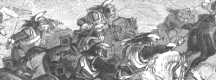 |
LOUIS XIV - WAR… 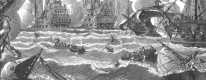 |
PHILIPPE AUGUSTE - BOUVINES,…  |
HENRI III - HENRI… 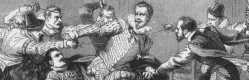 |
LOUIS XIII - CONCINI,…  |
HENRI IV - SIT… 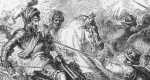 |
PHILIPPE VI, The ford… 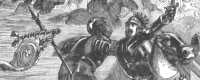 |
NAPOLEON - ULM, Battle… 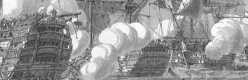 |
LOUIS XIII - RICHELIEU,…  |
LOUIS XIV - SUCCESSION… 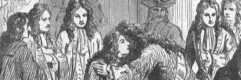 |
HENRI IV - SULLY,… 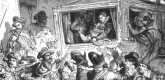 |
LOUIS XIV - TREATY… 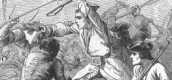 |
CONSTITUENT ASSEMBLY - MIRABEAU,… 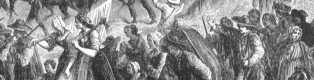 |
LOUIS XV - REGENCY,… 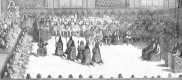 |
FRANÇOIS 1st - CÉRISOLES,… 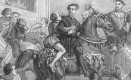 |
LOUIS XIV - COLBERT…  |
THE DIRECTORY - TREATY…  |
LOUIS SAINT - WHITE… 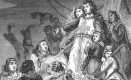 |
CHARLES VII - END… 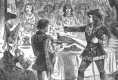 |
LOUIS XV - VOLTAIRE,…  |
THE GAULE CONQUERED BY…  |
INVASION OF THE BARBARIANS,…  |
PHILIPPE THE BEAUTIFUL ONE… 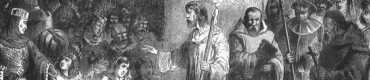 |
LOUIS XIV - FIRST…  |
FRANÇOIS 1st - MARIGNAN,…  |
LOUIS XIII - RICHELIEU,…  |
HENRI II - METZ,… 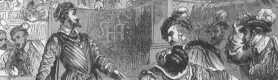 |
CONVENTION - TERROR, Battle… 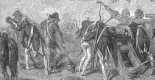 |
CHARLES VII - CASTILLON,… 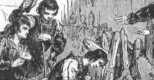 |
FRANÇOIS 1st - CHARLES-QUINT,…  |
LOUIS XIV - SUCCESSION…  |
FRANÇOIS II, Amboise.  |
LAST CAROLINGIANS, Hugues and…  |
THE FIRST CRUSADE, Preaching…  |
HENRI IV - ARCH,…  |
The FÉODALITE, Degradation of…  |
CHARLES IX - WARS…  |
HENRI III - HENRI… 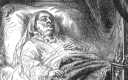 |
LOUIS XII - BAYARD,… 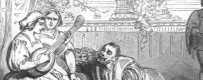 |
PRIMITIVE POPULATIONS OF THE…  |
LOUIS XIV - MAZARIN,…  |
LOUIS XVI, Marie-Antoinette.  |
LOUIS XIII - CONCINI,… 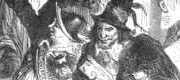 |
JEAN - ÉTIENNE MARCEL,…  |
THE DIRECTORY - NEWS…  |
THE DIRECTORY - ZÜRICH,…  |
LOUIS XI - PÉRONNE,…  |
CONSTITUENT ASSEMBLY - MIRABEAU,… 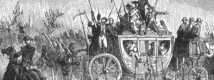 |
CONSULATE - MARENGO, Died…  |
NAPOLEON - WAGRAM, Battle…  |
CHARLES VIII, Battle of…  |
LOUIS XIV - COLBERT…  |
FRANÇOIS II, François II.  |
THE FIRST CRUSADE, Garden…  |
LOUIS XI - LEAGUE…  |
LOUIS XIII - RICHELIEU,… 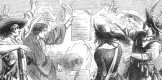 |
LOUIS XIV - STRASBOURG,…  |
CHARLEMAGNE EMPEROR, Crowning of… 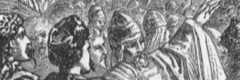 |
LOUIS XIII - CONCINI,…  |
new selection at each display |
|
|


 www.frenchhistory.net - édition internet de « L´HISTOIRE DE FRANCE EN 100 TABLEAUX » par Paul Lehugeur -
  -
-